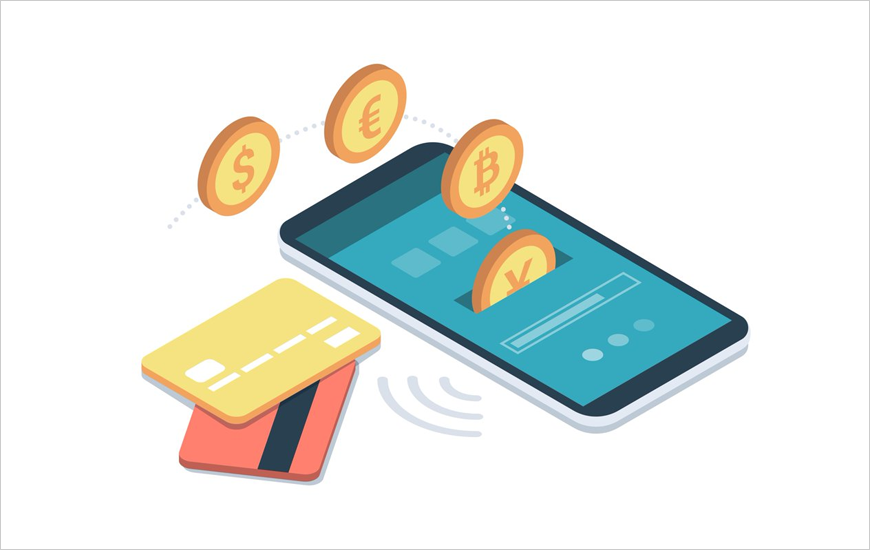

One of the more amusing contradictions in modern finance is watching an industry that promises to “disrupt traditional banking” spend most of its energy trying to make their products work exactly like traditional banking. We have cryptocurrencies that want to replace fiat money, but you buy them with fiat money. We have decentralized finance that eliminates intermediaries, except for the intermediaries you need to get your money into the system in the first place. And now we have something called “Web3” that represents the future of the internet, but the easiest way to participate is to buy Solana with debit card issued by JPMorgan Chase.
This is not necessarily a criticism! Sometimes the most revolutionary technologies succeed by making themselves as familiar and boring as possible. Email replaced postal mail by working basically like postal mail, just faster. Uber replaced taxis by working basically like taxis, just with an app. And crypto is trying to replace traditional finance by working basically like traditional finance, just with more volatility and significantly more Twitter drama.
Why Solana?
The Technology Story
Solana emerged from the same primordial soup of blockchain projects that gave us everything from legitimate innovations to elaborate schemes for selling digital pet rocks. But unlike many of its contemporaries, Solana actually solved some real technical problems, specifically the ones related to speed and cost that make using Ethereum feel like paying premium prices for dial-up internet.
The basic pitch is compelling: while Ethereum can process about 15 transactions per second (roughly the throughput of a busy McDonald’s drive-through), Solana can theoretically handle thousands. While Ethereum transaction fees can spike to $50 or more during busy periods, Solana transactions typically cost fractions of a penny. This matters enormously if you want to build applications that normal people might actually use, rather than just systems for trading increasingly abstract financial instruments between hedge funds.
The Community and Ecosystem
But the real reason people get excited about Solana isn’t just the technical specifications but the combination of good technology and a development community that seems focused on building actual products rather than just creating new ways to speculate on token prices.
The NFT ecosystem on Solana has produced some genuine innovations beyond expensive profile pictures. Projects like Metaplex have created infrastructure that makes it significantly easier for artists and creators to mint and sell digital collectibles, which matters if you think NFTs will eventually evolve beyond their current status as “extremely elaborate ways to signal membership in online communities.”
The Practical Problem: Getting Money Into Crypto Is Still Annoyingly Hard
The Traditional Exchange Experience
Here’s something the crypto industry doesn’t like to talk about: for technology that’s supposed to democratize finance and bank the unbanked, getting started with crypto is still remarkably difficult. The standard process for buying cryptocurrency involves creating accounts on exchanges that require more personal information than a mortgage application, waiting days for identity verification, navigating trading interfaces designed by people who apparently never met a normal person, and then figuring out how to safely store digital assets that disappear forever if you lose your password.
I’ve watched people with advanced degrees in engineering struggle with the basic mechanics of buying their first Bitcoin. The user experience typically involves learning a new vocabulary (What’s a “limit order”? Why are there so many different types of wallets? What exactly is happening during “KYC verification”?), understanding fee structures that would make credit card companies blush, and developing security habits that would be appropriate for storing nuclear launch codes.
Why Debit Cards Matter
This is where debit cards come in as genuine innovation, which is amusing because debit cards are hardly cutting-edge financial technology. But sometimes the most powerful innovation is making new technology work with old, familiar interfaces.
Buying cryptocurrency with a debit card feels like buying anything else online: enter your card details, confirm the purchase amount, wait a few minutes for processing. No limit orders, no order books, no existential questions about the difference between market makers and market takers. It’s the blockchain equivalent of Amazon’s “one-click purchasing”-a layer of familiar user experience on top of complex backend technology.
How to Actually Buy Solana with Your Debit Card
Choosing a Platform
The first step is selecting a platform that lets you buy SOL with a debit card, which requires navigating a marketplace that includes everything from well-established companies with proper regulatory licenses to websites that look like they were designed by someone who learned web development from YouTube tutorials.
The good news is that the industry has matured enough that there are several legitimate options for debit card crypto purchases. The bad news is that “matured” is a relative term in crypto, and new platforms appear regularly with business models that seem to involve a lot of venture capital funding and not much revenue.
When evaluating platforms, look for the usual markers of legitimacy: proper regulatory registration, transparent fee structures, real customer support (not just a chatbot that responds to everything with “have you tried turning it off and on again?”), and security measures that go beyond having a lock icon on their website.
Companies like SimpleSwap, and others have built reputations for reliable debit card crypto purchases over several years, which in crypto terms makes them ancient and venerable institutions. Traditional crypto exchanges like Coinbase and Kraken also offer debit card purchases, though often with higher fees than their bank transfer options.
The Step-by-Step Process
Once you’ve chosen a platform, the actual process of buying SOL with a debit card is refreshingly straightforward, assuming you can resist the urge to second-guess every decision along the way.
Step 1: Account Creation and Verification Create an account on your chosen platform, which typically involves providing an email address, creating a password, and verifying your identity with a government-issued ID. The identity verification process serves two purposes: regulatory compliance (platforms are required to know who their customers are) and fraud prevention (stolen credit cards are a persistent problem in crypto).
Step 2: Adding Your Debit Card Link your debit card to the platform by entering your card details and completing a verification process, which usually involves confirming a small test transaction or providing additional authentication through your bank. This step sometimes feels more complicated than it should be, but it exists to prevent the kind of fraud that was rampant in crypto’s early days.
Step 3: Making the Purchase Navigate to the platform’s purchase interface, select Solana (SOL) from what is probably a bewildering array of cryptocurrency options, enter the amount you want to buy (either in dollars or in SOL), and confirm the transaction. Review the fees carefully-they’re usually displayed prominently, but sometimes in ways that make them seem smaller than they actually are.
Step 4: Receiving Your SOL After payment processing (which can take anywhere from a few minutes to several hours), your SOL will appear in your platform wallet. From there, you can either leave it on the platform (convenient but less secure) or transfer it to your own Solana wallet (more secure but requiring you to manage your own private keys).
Understanding Fees and Limits
Debit card crypto purchases are convenient, but convenience costs money. Platforms typically charge a combination of processing fees (to cover credit card transaction costs), spread markup (the difference between the price they pay for crypto and the price they charge you), and sometimes flat fees on top of everything else.
These fees can add up quickly. A typical debit card SOL purchase might involve a 3-5% processing fee, plus a spread that effectively increases the purchase price by another 1-2%, plus potential currency conversion fees if you’re not using USD. On a $100 purchase, you might pay $6-8 in total fees, which sounds reasonable until you realize that’s a 6-8% premium for convenience.
Security Considerations
Protecting Your Purchase
Successfully buying SOL with your debit card is just the beginning-now you need to figure out how to store it safely, which involves learning about concepts like private keys, seed phrases, and wallet security that most people never wanted to understand.
The fundamental choice is between convenience and security. Leaving your SOL on the platform where you bought it is convenient (you can easily buy more or sell what you have) but risky (if the platform gets hacked or goes bankrupt, your SOL might disappear). Transferring your SOL to your own wallet is more secure (you control the private keys) but more complicated (you’re responsible for not losing access to your own money).
Common Scams and How to Avoid Them
The crypto world attracts scammers like a honey pot attracts bears, and new Solana holders are particularly attractive targets because they often lack the paranoia that comes with experience in the space.
Phishing scams are probably the most common attack, where criminals create fake websites that look like legitimate crypto platforms and trick users into entering their private keys or seed phrases. The fake sites often look remarkably professional and may even share similar URLs to legitimate platforms. The rule is simple: never enter your private keys or seed phrase on any website, ever, for any reason.
Fake customer support is another popular scam, where criminals contact crypto users claiming to be from their wallet or exchange and offering to “help” with various problems. Real crypto platforms will never ask for your private keys or seed phrase, and they’ll never initiate contact asking you to “verify” your account by providing sensitive information.
Best Practices for New Users
For most people buying their first SOL, implementing reasonable security measures is more important than achieving perfect security. Start with basic practices: use strong, unique passwords; enable two-factor authentication whenever possible; keep your seed phrase written down and stored safely offline; and be skeptical of unsolicited contact from anyone claiming to be able to help with crypto-related problems.
As your holdings grow or your technical confidence increases, you can implement more sophisticated security measures like hardware wallets, multi-signature setups, or cold storage solutions. But for someone just experimenting with Solana, a reputable software wallet with good backup procedures is probably sufficient.
Platform Comparison: What Actually Matters
Evaluating Your Options
Choosing the right platform for buying SOL with a debit card requires weighing factors that matter more than the marketing materials suggest. Security should be your top priority, but “security” means more than just SSL certificates and nice-looking websites.
Look for platforms that are properly regulated in your jurisdiction-this might seem like a boring detail, but regulatory oversight provides important protections for customers and suggests that the platform plans to exist long enough for regulations to matter. In the United States, platforms that operate as money transmitters are required to maintain certain capital reserves and follow specific procedures for handling customer funds.
Fee transparency is another important consideration. The best platforms clearly explain all fees upfront, including processing fees, spread markups, and any other charges. Be wary of platforms that advertise “zero fees” but make money through hidden spread markups or other less obvious mechanisms.
Making the Trade-offs
Every platform involves trade-offs between cost, convenience, security, and features. Platforms that offer the lowest fees usually require more technical sophistication and longer settlement times. Platforms that offer the best user experience usually charge premium pricing for that convenience. Platforms with the strongest security features often have the most complicated verification processes.
Conclusion: The Future of Accessible Crypto
What We’ve Learned About Digital Asset Adoption
The ability to buy Solana with debit card represents more than just another way to acquire cryptocurrency-it illustrates how innovative financial technologies eventually succeed by integrating with familiar systems rather than replacing them entirely. The most revolutionary aspects of blockchain technology might ultimately be invisible to end users, hidden behind interfaces that work exactly like the systems they’re supposed to be disrupting.
This pattern appears throughout the history of financial innovation. Credit cards didn’t eliminate cash by being completely different from cash-they succeeded by working like cash but with additional conveniences. Online banking didn’t replace traditional banking by creating entirely new concepts of money-it succeeded by making traditional banking operations available through more convenient interfaces.
The Bigger Picture
The simplification of crypto purchasing through debit card integration suggests that we’re moving from the experimental phase of blockchain adoption toward something resembling mainstream utility. When buying cryptocurrency becomes as straightforward as buying anything else online, it removes one of the key barriers preventing regular people from experimenting with these systems.
This accessibility matters because the most interesting applications of blockchain technology-from creator monetization platforms to decentralized social networks-require user bases large enough to create meaningful network effects. If only crypto enthusiasts can figure out how to acquire tokens, then blockchain-based applications will remain niche experiments. If regular people can easily acquire tokens, then these applications might actually compete with traditional alternatives.