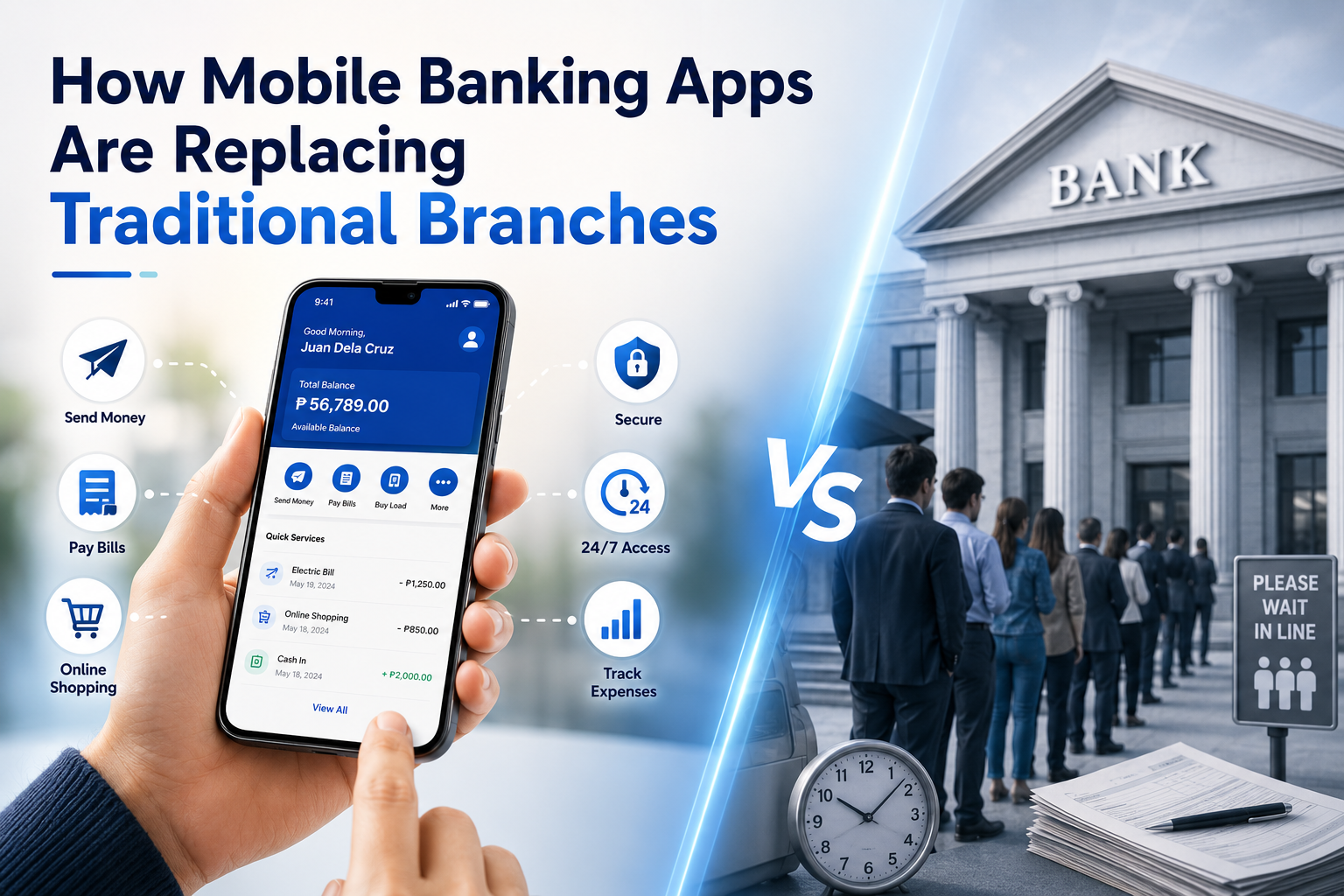

Mobile banking apps have changed how people access banking services in the Philippines and beyond. Visiting physical bank branches is no longer necessary, barring some exceptions. Convenient financial services are now accessible from any smartphone and, unsurprisingly, people have switched en masse to mobile banking. Let’s examine how and why this is the case.
Why Mobile Banking is Becoming More Popular
The rise of mobile banking centers on the ease of accessing financial services conveniently from a smartphone. Anyone can download a banking app, register, and verify their identity, and begin transacting within hours. Before mobile banking became ubiquitous, opening a bank account required a trip to a physical branch, but no longer. The benefits of a mobile banking app are evident.
What Users Can Do on Mobile Banking Apps
Users can conduct everyday transactions through mobile banking apps. Whether it’s sending money to a friend, paying a utility bill, or paying for online shopping, you can transact seamlessly from a mobile app. You can always check your account balance and review all past transactions. With mobile banking services, you’re assured of convenience and accurate record-keeping.
How Mobile Banking Saves Time for Everyday Users
Those hours spent visiting bank branches and standing in queues add up significantly. Mobile banking makes them unnecessary, saving you time that can be used for other productive activities. From your smartphone and from any location, you can transact easily with an online banking platform. Services such as Salmon Bank online banking reflect how modern banking tools can make everyday money management more convenient for users.
Why Traditional Branches Still Matter
Although mobile banking apps have reduced the need for traditional branches, they still play a key role in enabling convenient banking. For example, you may need to visit a branch to process complex transactions involving large amounts or to access in-person support. Mobile banking apps provide virtual support, but sometimes, face-to-face support is preferable. Traditional bank branches won’t disappear anytime soon.
Security Habits for Mobile Banking Users
Given the sensitive information and sizable amounts passing through mobile banking apps, users should adopt security habits to prevent theft.
For example, lock your banking app with biometrics, requiring a facial or fingerprint scan to access it, even if someone gets your smartphone. Enable two-factor authentication for logins, and use strong passwords. Avoid using public WiFi networks to access banking apps because they are often insecure. These mobile banking security habits help ensure reliable, safe transactions.
Key Takeaways
- Mobile banking apps make routine transactions very convenient. They save considerable time for users.
- Yet, traditional bank branches still have a role to play in enabling convenient banking, particularly for customers who prefer face-to-face support.
- Users also play their part by adopting standard security practices, like two-factor authentication, strong passwords, and biometric authentication.
Conclusion
Mobile banking apps have become part of everyday financial management, and the momentum isn’t stopping anytime soon. They offer speed, convenience, and accessibility, making them an increasingly preferred option for money. On your part, adhere to responsible money management and adopt standard security practices to ensure safe transactions.