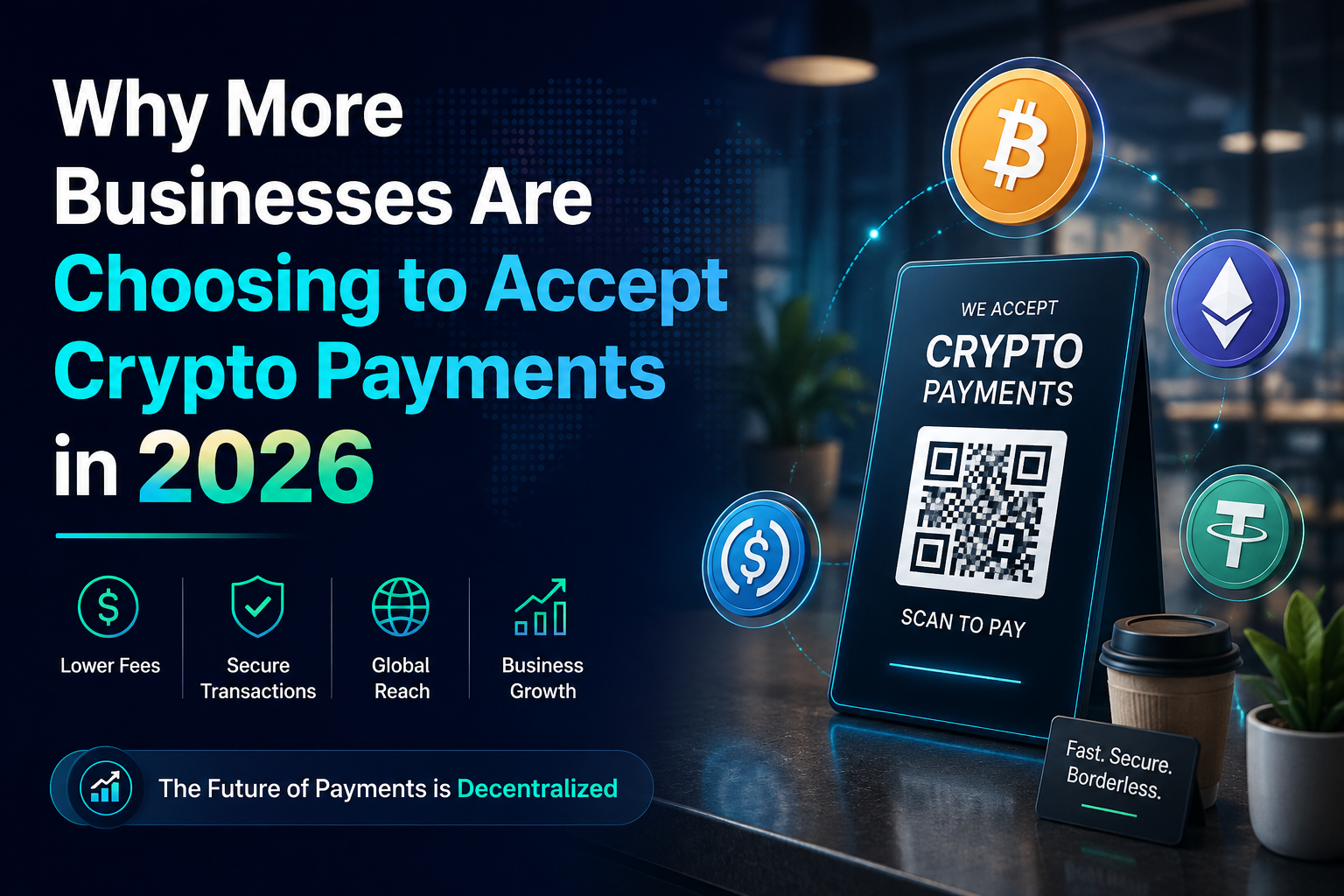

For a long time, taking crypto at checkout was treated as a novelty — a badge some tech-forward brands wore to look modern, more marketing than money. That framing is out of date. Walk through the checkout flows of online stores, SaaS tools, freelancers, and digital marketplaces in 2026 and you’ll notice how ordinary the “pay with crypto” button has become. It’s no longer a statement. It’s just another way to get paid.
What’s interesting isn’t that the option exists — it’s *why* so many businesses have quietly switched it on in the last couple of years. The reasons are practical, and most of them come down to money, reach, and control. Let’s unpack what actually changed and whether it’s worth your attention.
What Actually Changed
Three shifts turned crypto payments from a curiosity into a serious business tool.
The first is stablecoins. Early on, the biggest objection to accepting crypto was volatility — nobody wants to invoice $500 and watch it become $430 by the time it settles. Stablecoins like USDT and USDC removed that problem entirely. A dollar-pegged token behaves like a dollar. You can price in fiat, get paid in stablecoins, and the amount that lands is the amount you expected. For most merchants today, the majority of crypto payments are stablecoins, not speculative coins.
The second is wallet experience. Paying with crypto in 2024 could still feel clunky. In 2026, mobile wallets scan a QR code, autofill the amount, and confirm in seconds across fast, low-fee networks. The friction that used to scare off non-technical buyers has largely evaporated.
The third is normalization. When enough well-known companies, payment tools, and platforms support crypto, it stops feeling risky to customers and merchants alike. Accepting it is no longer an edgy decision that needs defending in a board meeting — it’s a checkbox.
The Real Business Case
Trends are nice, but businesses adopt tools because they solve problems. Here’s what crypto payments actually do for the bottom line.
Lower Processing Costs
Card processing quietly eats 2.5–4% of every transaction once you add interchange, gateway fees, and cross-border surcharges. On thin-margin products, that’s the difference between a healthy and a painful month. A lean crypto setup can run closer to a flat 1%, with no monthly minimums buried in a contract. For high-volume or high-ticket sellers, that gap compounds into real money over a year.
Customers Cards Can’t Reach
This is the benefit people underestimate. A significant share of the world can’t or won’t pay with a Visa. Some live in regions with limited banking access. Some have been de-platformed by a payment processor for operating in a “high-risk” category that’s perfectly legal. Some simply refuse to hand card details to yet another merchant. Crypto is borderless by design — it lets all of those people pay you without asking permission from a bank. For businesses selling globally, that’s not a rounding error; it’s a new customer segment.
No Chargebacks
Anyone who’s run an e-commerce store knows the sting of a “friendly fraud” dispute weeks after the goods shipped. Card payments can be clawed back long after you’ve delivered. On-chain payments are final. Once a transaction confirms, the money is yours — no dispute window, no clawback, no lost inventory plus a fee on top. For digital goods and services, where fraud disputes are rampant, that finality is worth a lot.
Faster Access to Your Money
Traditional processors often hold funds on a rolling schedule, and some freeze balances for “review” at the worst possible moment. Crypto settlements confirm in minutes, and with the right setup the funds go straight to a wallet you control. No payout cycle, no waiting, no one deciding whether you’re allowed to touch your own revenue this week.
The Catch Most People Miss
Here’s the part that separates a good crypto setup from a risky one: who holds the money between the payment and you?
Some gateways are custodial. They receive the crypto into their own wallets first, then pay you out later — often after identity checks and settlement delays. That reintroduces exactly the problems crypto was supposed to solve: a middleman holding your funds, able to freeze, delay, or lose them if the company has a bad week or gets hacked. You’ve swapped a bank for a crypto company and kept most of the risk.
The alternative is non-custodial. The payment settles directly to a wallet address you control; the provider never touches the money and never holds the keys to move it. It simply verifies the transaction on-chain and tells your store the order is paid. This is the model worth insisting on, because it’s the one that actually delivers the control benefit — your revenue is yours the instant it arrives.
The simplest way to accept crypto payments without inheriting custodial risk is exactly this: a non-custodial gateway that routes each payment straight to your wallet, charges a flat fee, and never becomes a point of failure between you and your money.
How to Start (It’s Simpler Than You Think)
You don’t need to understand blockchain at a developer level, and you don’t need to touch a line of smart-contract code. The setup is short:
- Pick a non-custodial gateway and connect a wallet address you own. That address is where payments land.
- Choose your coins. Enabling BTC, ETH, USDT and USDC covers the overwhelming majority of what customers actually pay with. Leaning on stablecoins keeps the accounting clean.
- Install a plugin or use the API. Most stores on WooCommerce, OpenCart, or similar platforms can add crypto checkout with a ready-made plugin; custom sites and apps use a REST API. Either way it slots in next to your existing payment methods.
- Test with a small payment. Send a real transaction to confirm the flow end to end, then flip it live.
That’s genuinely it. Many merchants go from “let’s try this” to a working crypto checkout in an afternoon.
Is It Right for Your Business?
Crypto payments aren’t a fit for literally everyone, so be honest about your situation. If you sell to a purely local customer base that only ever pays by card and never disputes anything, the upside is smaller. But if any of the following describe you, it’s worth switching on:
- You sell internationally, or want to.
- You deal in digital goods or services and get hit by chargebacks.
- Your margins are tight enough that a 2–3% fee difference matters.
- You’ve ever had a processor freeze or delay your funds.
- Your customers have asked for it — even a few times.
The cost of offering it is low, especially with a flat-fee, non-custodial setup and no monthly minimums. The downside of *not* offering it is quiet but real: every customer who wanted to pay in crypto and couldn’t simply bought somewhere else.
The Bottom Line
Accepting crypto in 2026 isn’t a bet on where the market is going — it’s a response to where it already is. Stablecoins solved the volatility problem, wallets solved the friction problem, and normalization solved the trust problem. What’s left is a straightforward business calculation: lower fees, a wider audience, no chargebacks, and faster access to your own revenue.
Add in a non-custodial model, and you get all of that without handing control of your money to anyone. For a growing number of online businesses, that math has already stopped being a debate — it’s just how they get paid now.