

Bitcoin and stablecoins play different roles in crypto markets. Bitcoin tends to respond to shifts in investor positioning and capital flows, while stablecoins are mainly used to move liquidity and settle trades across exchanges. Price discovery in 2026 appears increasingly influenced by ETF-driven demand cycles on the institutional side and stablecoin liquidity on the execution side..
The Current Picture: Unsettled but Charged
Bitcoin traded between roughly $110,000 and $120,000 during several stretches of 2025, before slipping back toward the $90,000 area as ETF inflows became less steady. During weaker market periods, US spot Bitcoin ETFs — including BlackRock’s IBIT — also recorded sizeable outflows, with combined daily redemptions across the sector at times nearing $500 million.
At the same time, stablecoin liquidity continued to expand. Total stablecoin supply has been estimated in the $250 billion–$320 billion range during stronger liquidity phases in stronger liquidity phases, with Tether (USDT) accounting for roughly $160 billion–$190 billion, maintaining around 55%–60% of the sector.
This remains important because a large share of trading activity relies on the ability to quickly convert BTC to USDT. For many market participants, that conversion remains the main liquidity bridge between directional exposure and cash-like positioning. It continues to support depth across centralized exchanges and DeFi protocols.
Recent conditions show a shifting balance between ETF-driven liquidity on the demand side and stablecoin expansion on the execution side, with no persistent dominance from either channel.
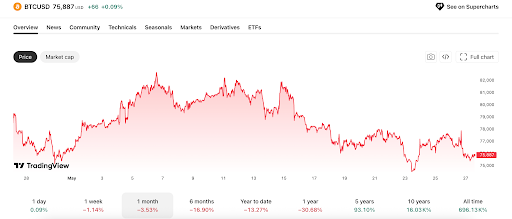
Under the Hood: What’s Driving Bitcoin Now
Bitcoin’s short-term price action clusters around liquidity rebalancing rather than gradual changes in underlying fundamentals.
Bitcoin reacts most directly to institutional allocation through US spot ETFs, which now act as the main link between traditional capital markets and spot demand.
Institutional Capital and ETF Behavior
ETF flow data in 2025 shows regular switches between inflows and outflows. Across the US spot ETF complex, daily flows often sit in the multi-hundred-million-dollar range, with occasional spikes approaching $500 million in combined activity.
These flows are distributed across major products, including IBIT and other large issuers, and are quickly reflected in spot liquidity through the creation and redemption mechanism.
ETF flows translate into spot demand through creation and redemption mechanisms, making them one of the dominant short-horizon drivers of price adjustments.
Macro Conditions: Liquidity and Rate Expectations
Macro conditions influence Bitcoin mainly through liquidity expectations. In 2025, price behavior has tracked changes in real yields and expectations around monetary policy.
Tighter financial conditions tend to reduce risk exposure, while easing conditions support allocation into risk assets through ETF and derivatives channels.
Network Activity and Structural Signals
On-chain activity provides a slower reference layer rather than a short-term trading signal. Bitcoin network activity has generally fluctuated between about 250,000 and 500,000 daily transactions, varying with market participation levels.
Meanwhile, mining power has stayed close to record territory, suggesting continued network stability. At the same time, more BTC is being held through custodial and regulated platforms, making traditional exchange balance metrics less straightforward than they were in earlier market cycles.
Realized price bands and holder distribution are now used mainly as contextual markers rather than timing signals.
Predictive Models and Technical Signals
Bitcoin forecasts are now built from several moving pieces at once — ETF flows, liquidity conditions, macro trends, and blockchain data all feed into the picture. In practice, large capital flows and overall market liquidity tend to carry more weight than standalone technical or on-chain indicators.
- Quantitative Valuation Models — Institutional models combine ETF flow assumptions, macro variables, and adoption trends to build probabilistic scenarios rather than fixed targets. ETF sensitivity is a key input, reflecting the direct impact of institutional capital on spot liquidity.
- On-Chain & Machine-Learning Models — These models track wallet activity, exchange inflows and outflows, and long-term holder distribution. In current conditions, they are mainly used to identify shifts in participation and liquidity rather than precise price direction signals, especially as ETF custody reduces the clarity of exchange-based supply signals.
- Event-Driven Analysis — Stablecoin issuance and redemption activity is closely monitored as a liquidity signal. USDT supply changes are treated as liquidity confirmation signals rather than directional indicators. Tether (USDT) remains the main reference due to its dominant role in trading pairs.
Price action continues to react around liquidity clusters rather than classical support-resistance levels. Heavy trading interest has repeatedly appeared around the $90,000–$95,000 area, while activity also tends to accelerate once price moves above $120,000. These ranges appear to reflect liquidity concentration and positioning pressure more than traditional technical support or resistance.
Blockchain data further points to a large cluster of holdings accumulated near the $111,000–$117,000 range, making that area particularly sensitive during recent phases of profit-taking and market rebalancing.
Forecast Scenarios: Paths into 2026
Bringing together ETF flow dynamics, macro conditions, and liquidity structure, Bitcoin’s outlook into 2026 can be described through three scenario paths. These scenarios represent conditional outcomes based on flow and liquidity regimes.
Bitcoin price behavior in this framework is primarily driven by the balance between institutional demand and liquidity conditions rather than traditional cycle assumptions.
Scenario Overview
| Scenario | Assumptions | Projected Range |
| Base Case | ETF flows remain mixed with alternating inflow and outflow phases, macro conditions stable but uneven, gradual adoption continues | $85,000 – $125,000 |
| Bull Case | Sustained ETF inflows, improving liquidity conditions, stronger risk appetite across markets | $130,000 – $180,000+ |
| Bear Case | Persistent ETF outflows, tighter liquidity conditions, weaker risk environment | $60,000 – $85,000 |
Citi’s recent projections outline a broad range of possible outcomes rather than a single target. In their base scenario, Bitcoin trends toward roughly $130,000–$135,000, while stronger and more persistent ETF inflows could push prices closer to the $170,000–$180,000 area over the following year. Under weaker liquidity conditions, their downside cases extend into the low-$80,000 range.
Why USDT Matters
Stablecoins function as the settlement layer of crypto markets, with USDT widely used as a settlement and pricing unit across exchanges.
- Liquidity Role: USDT is the primary quote asset for most trading pairs and a core component of DeFi settlement. It acts as the main intermediary between crypto exposure and USD liquidity. Supply changes in USDT are closely tracked as a proxy for shifts in market liquidity and trading activity.
- Reserves and Rates: Tether’s reserves are mainly held in short-term U.S. Treasuries and cash equivalents, with smaller exposure to other assets. This links its income profile to short-term interest rate conditions in U.S. money markets.
- Regulation: Frameworks such as the EU’s MiCA framework are tightening reporting and reserve requirements for stablecoin issuers. For USDT, the biggest effect is likely to be on how it is offered through regulated European platforms, rather than on its broader global circulation.
Risks That Could Derail the Forecast
Several factors could still shift the market away from these scenarios, especially if liquidity conditions or institutional positioning change quickly:
- Prolonged ETF Outflows
Large or persistent ETF redemptions can weaken institutional buying pressure and make short-term price swings more aggressive. In recent market pullbacks, even single-day outflow spikes were often accompanied by sharp reactions across spot and derivatives markets. - Macro Shock or Policy Pivot
A sudden tightening of global monetary policy or renewed macro volatility may spook risk capital. - USDT Redemption Stress
Heavy redemption pressure or tighter regulatory restrictions could put stress on USDT liquidity and create instability across trading venues, especially in markets where Tether remains the main settlement asset.. - Liquidity Crunch
Large transfers or positioning shifts by major BTC or USDT holders can sometimes distort liquidity conditions, particularly during periods of elevated minting, redemptions, or thin market depth.
Strategic Takeaways for Market Participants
- Traders: Keep ETFs at the top of your radar. ETF flow data, especially for major funds, may drive near-term BTC volatility. Keep an eye on on-chain USDT activity as well, since large minting or redemption events can signal shifts in market liquidity.
- Long-Term Investors: Bitcoin still attracts long-term interest, particularly among investors focused on institutional participation and broader network adoption. But it’s wise to diversify and manage risk — drawdowns may be sharper than in previous cycles.
- DeFi / Stablecoin Users: USDT’s dominance is not guaranteed forever. Watch Tether’s reserve disclosures and regulatory shifts, as those could meaningfully affect the stablecoin’s role in the market.
Broader Outlook: Analyst Forecasts into 2026
Beyond 2025, most institutional forecasts for Bitcoin and Ethereum continue pointing in the same general direction, though projected upside varies depending on liquidity conditions and the pace of ETF-related capital inflows.
Institutional Bitcoin Scenarios
| Institution | Time Horizon | Bull Scenario | Bear Scenario | Key Assumption |
| Citi (research scenarios) | 12–18 months | ~$150,000–$180,000 (ETF inflow-driven upside case) | Below ~$85,000 (macro downturn scenario) | ETF flows + macro liquidity conditions |
| VanEck | End of 2025 | ~ $180,000 (bull case scenario) | Not formally standardized in same model | Sustained institutional adoption |
Ethereum Context
Long-term forecasts for Bitcoin and Ethereum are increasingly framed within shared macro and liquidity models. Ethereum is typically evaluated alongside Bitcoin as part of broader digital asset allocation strategies, with outcomes dependent on risk appetite and capital inflows rather than cycle timing.
Key Takeaways
Bitcoin in 2026 is largely influenced by institutional flow cycles, with ETF activity shaping short-term direction and liquidity conditions defining the broader trading range. Stablecoins provide a settlement layer that enables these flows to translate into spot market movement.
Market structure is increasingly determined by the interaction between capital allocation and liquidity supply, rather than traditional cycle-based dynamics.
Here are 5 concise FAQ items aligned with your text, without repetition and keeping the same analytical tone:
FAQ
1. Why Do ETF Flows Affect Bitcoin So Much Now?
Spot ETFs brought a different type of capital into the market. Large inflows usually increase buying activity, while periods of heavy withdrawals often coincide with sharper price swings.
2. Why is USDT Still Used So Heavily?
Most major exchanges continue to rely on USDT pairs for trading and settlement. It is also commonly used to move funds between platforms without converting back into fiat currency.
3. Can Interest Rates Influence Crypto Markets?
They already do. When liquidity tightens and borrowing costs rise, traders and funds usually reduce exposure to higher-risk assets, including crypto.
4. Why Do Analysts Pay Attention to USDT Minting and Redemptions?
Large changes in supply can reflect shifts in trading activity and exchange liquidity. They do not determine price direction by themselves, but they often appear during periods of stronger market movement.
5. How Should Long-term Bitcoin Forecasts Be Viewed?
Most projections depend on market conditions that can change quickly. ETF demand, liquidity, regulation, and broader investor sentiment all influence how realistic a forecast eventually becomes.
Disclaimer:
This article is for informational and educational purposes only and should not be considered financial or investment advice. Cryptocurrency markets remain highly volatile, and forecasts are based on current market conditions, liquidity trends, and publicly available institutional scenarios, all of which may change over time.