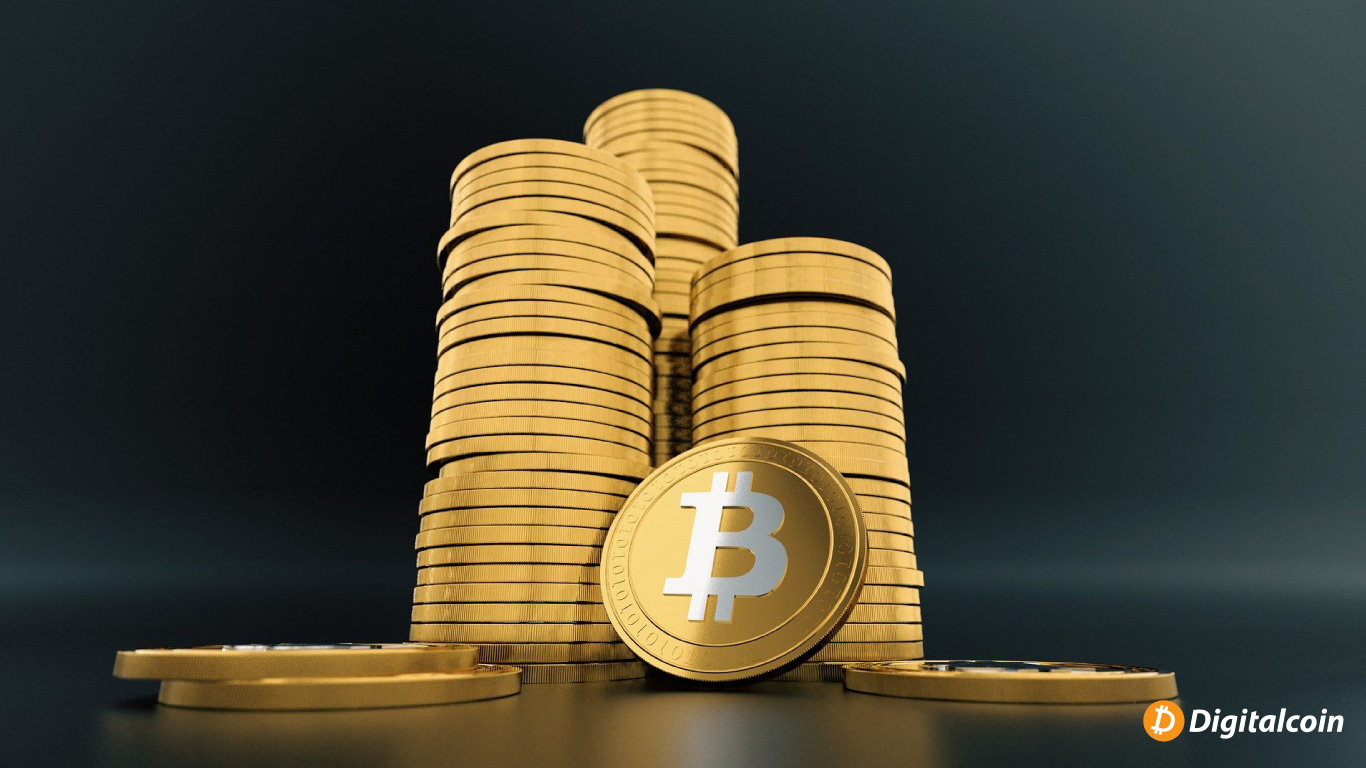

Since its introduction as the first digital currency, Bitcoin has been taking the world by storm. From mining to trading, cryptocurrency has opened new financial markets and provides a secure alternative to traditional banking.
What many new miners are surprised to find is that, similar to standard mining, there is a finite number of Bitcoins that can be mined. By design — because it is written into Bitcoin’s source code — is the fact that a maximum of 21 million Bitcoin exists to be mined. Once this number has been reached, miners will be dependent on the transaction fees of already-mined blocks to receiving monetary rewards. Of course, there are still many years left before we reach that point, and nobody knows how the digital landscape will change between now and then.
When will the final Bitcoin be mined?
As of March 2021, about 18.5 million Bitcoin (or about 88%) have been mined and are circulating around the globe. This leaves 2.5 million Bitcoin left for mining before it is depleted. The current mining rate is one new block every ten 10 minutes, with each newly mined block adding 6.25 new Bitcoin into rotation; this equates to 900 new Bitcoin being added to the virtual currency on a daily basis.
Considering the ever-changing nature of online platforms and their capabilities, it is hard to predict precisely when the last Bitcoin will be mined. Cryptocurrency experts estimate that we can expect to see the last bits of Bitcoin being extracted by the year 2140, based on the math.
Another thing to consider is what is commonly referred to as Bitcoin’s Halving Event — this means that for every block mined, the amount of Bitcoin received per block is cut in half. This happens every four years, with the most recent occurrence being in February 2021. Prior to that event, miners received 12.5 Bitcoin per block; now, they receive 6.25 Bitcoin per block.
This is a built-in mechanism that controls the rate at which Bitcoin is distributed. It is anticipated that as 2140 approaches, miners will spend years mining blocks to get the last pieces of Bitcoin that exist. Investors should bear in mind that a lot can happen between now and then that may impact Bitcoin’s landscape.
What happens once Bitcoin has reached its limit?
Once Bitcoin reaches its capacity, miners will be compensated via fees for transactions done on the block. These fees are likely to increase as the years progress and the price of Bitcoin increases.
In addition, Bitcoin will still be available to buy and trade online as what is predicted to be a valuable commodity.
How Long Does it Take to Mine One Bitcoin?

Cryptocurrency has been fascinating the world ever since it was first introduced in 2008. The first such digital currency being Bitcoin (BTC), whose increase in trade (and worth) has only intensified peoples’ curiosity around what it is and how to get it. The fact that it can be used securely and anonymously has also made it an increasingly popular method of online payment.
Bitcoin is built off the blockchain concept, considered the most secure way of conducting online transactions. Essentially, it is a secure block, made up of highly encrypted lines of code that stores data. There are various ways of acquiring Bitcoin, and one such way is through mining. Mining can take anything from ten minutes to a few weeks and can be very profitable.
Today one Bitcoin is worth more than $30 000. Besides continuous mining, this surge in price is also due to the introduction of cryptocurrency as a trading commodity in 2010.
How Does it Work?
Mining consists of finding blocks for data storage through the use of mining hardware and solving mathematical equations to verify them. This process may sound complex but is simpler than you may think. Let’s break it down.
Once you have found a block through mining (this is where mining software comes in handy), new data and transactions are recorded within that block and added to the collective data ledger. For these transactions to be verified, the miner is challenged with a variety of cryptographic sums that require solving. The process through which these challenges are solved and verified contributes to the blockchain’s security encryption. Once completed, the miner is rewarded in Bitcoin for every new block found and verified.
Which Exchanges offer Mining?
According to this cryptocurrency guide there are several crypto exchanges that offer seamless mining experiences for all traders and investors interested in exploring this new type of earning passive income. It’s easy to get started and these platforms have made the on-ramp possible through smart integrations and third party providers.
Some of the most promising digital asset exchanges to offer mining are:
- StormGain
- Okex
- Binance
- Gate.io
What surprises many people is the fact that the mining is free to use and it only requires you to have a decent desktop or even laptop to get started. The rewards earned on the platform vary depending on your trading activity. Usually, a higher monthly trade volume unlocks better rewards and fast mining.
How Long Does it Take?
The time it takes to mine and successfully be awarded Bitcoin is dependent on a variety of factors. These factors include your CPU Power, the type of mining hardware you’re using, and how many other miners you’re competing with at the time. Where all the above elements are optimized, you can find yourself having mined for one Bitcoin within ten minutes.
However, due to the competition involved through the establishment of large mining organizations, the successful mining of one Bitcoin may take up to 30 days. It is worth noting that due to the influx of miners (and mining companies), maximum optimization of all the above elements is not always possible and can become costly. Costs to consider are:
- Electricity costs
- Hardware expenses
- Mining pool fees
- Costs involved for unforeseen circumstances, such as hacks or crashes
Another influential aspect to consider is your location. This is because consumption rates differ from country to country, making it more beneficial to mine from some countries than others. Depending on your location, setup, and the devices being used, attaining one BTC in the span of 30 days can cost in excess of $70 000.
Conclusion
As digital currency’s value has increased, so has the number of determined miners looking to get a slice of the pie. When it was first introduced, the initial concept was that anyone with a computer could mine. Today, successful mining requires powerful hardware and software that, when used correctly, is entirely worthwhile.